‘What the weird and the eerie have in common is a preoccupation with the strange. The strange — not the horrific. The allure that the weird and the eerie possess is not captured by the idea that we ‘enjoy what scares us’. It has, rather, to do with a fascination for the outside, for that which lies beyond standard perception, cognition and experience.’ (Fisher, 2016, p. 8).
Central to my research is pareidolia, a phenomenon where the nervous system inherently tends to find human-like faces where none are actually present in artefacts or scenery. This tendency extends across sensory modalities to sound, touch, and even proprioception (Riekki et al., 2013, p. 150), prompting us to perceive meaningful forms in suggestive configurations of ambiguous stimuli (Nees and Phillips, 2015, p. 130). As humans, we are psychologically primed through top-down perceptual processing to seek patterns as a survival mechanism: seeing a face in the swirl of a carpet, danger in shadows, a presence touching our skin, or music in the hum of household appliances.
My research is also driven by a phenomenological autoethnographic interest in auditory pareidolia, having experienced intense auditory illusions during periods of extreme nervous system collapse. These illusions consisted of voices, sounds, and music emanating from electrical appliances. They often manifested as family members calling out for help, or as fully formed songs in familiar styles but of a completely new composition, for example, a country song in the style of Dolly Parton, demonstrating the brain’s remarkable capacity for creativity in the most challenging circumstances. Crucially, as Fisher suggests, there is a sense of the eerie, rather than the horrific, to these illusions: a presence where there should be only static, and a familiarity to the voices that is profoundly skewed by their source.
A crucial clarification is that pareidolia is not inherently pathological, though it can be an indicator of co-morbid conditions. Rather, it suggests a universal human bias to perceive human characteristics where none exist (Riekki et al., 2013, p. 155). However, severe central nervous dysregulation caused by factors such as sleep deprivation, fever, prolonged stress or acute substance withdrawal can amplify the misinterpretation of signals to extreme levels.
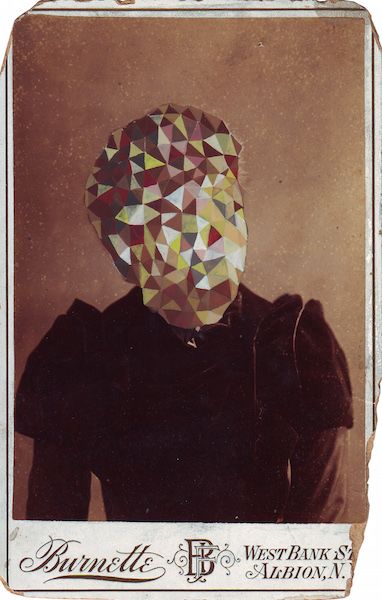
During periods of acute nervous system stress our brains enter a state of hyper-vigilant awareness, turning the entire body into a highly sensitised somatic receiver. EVP researchers deliberately attempt to invoke these same conditions through radio scanners and electromagnetic field (EMF) techniques, intentionally mangling signals through technology in pursuit of contact with the paranormal or extraterrestrial. Sound artists, by contrast, have adopted these EVP techniques not as instruments of belief but as aesthetic strategies, exploring the creative and perceptual possibilities that emerge when the nervous system enters such heightened states. Through preliminary analysis of The Ghost Orchid – An Introduction to EVP (Ash International, 1999), Still Life – Requiem (von Hausswolff, 2017), and my own sound experiments I will set out on an exploration of the aesthetic possibilities of auditory pareidolia within noise, sound art and acousmatics.
Third Order Surrogacy and Dionysian Sound Waves
In my opening epigraph, I quoted Fisher’s extended essay The Weird and the Eerie, a central arborescent root in the rhizome of my inquiry. Fisher defines ‘the weird’ as ‘a sensation of wrongness: a weird entity or object is so strange that it makes us feel that it should not exist, or at least it should not exist here. Yet if the entity or object is here, then the categories which we have up until now used to make sense of the world cannot be valid’ (Fisher, 2016, p. 15). Conversely, he defines ‘the eerie’ through ‘the most fundamental metaphysical questions one could pose, questions to do with existence and non-existence: Why is there something here when there should be nothing? Why is there nothing here when there should be something?’ (Fisher, 2016, p. 12).
It can be argued that ‘the eerie’ is a pervasive presence within expanded sound practices. This is partly due to the prevalence of ‘third-order surrogacy,’ achieved through analogue (e.g., reel-to-reel tape) and digital (DAW) sound manipulation. As Smalley (1997, p. 111) explains, in third-order surrogacy, ‘a gesture is inferred or imagined in the music. The nature of the spectromorphology makes us unsure about the reality of either the source or the cause, or both. […] even though we do not know exactly what the source might be because its sound-quality is unfamiliar, or because the resonance behaves in an unexpected way (uncertain/unknown source).’
Schafer’s concept of Dionysian versus Apollonian sound is also relevant to our investigation. Where Apollonian sound demands external order, balance, and mathematical harmony, Dionysian sound arises from internal emotional turbulence, it is sound breaking forth from the subjective self (Schafer, 2012, p. 97). Under nervous system dysregulation, our listening becomes fundamentally Dionysian. The ear refuses passive observation and actively projects emotion, voice, and narrative onto chaotic static.
The Ghost Orchid – An Introduction to EVP
The Ghost Orchid is a compilation of archival Electronic Voice Phenomena (EVP) by Cass, Jürgenson and Raudive among others with additional commentary by Elggren. However, the EVP community itself was far from unified in their interpretation of these recordings. Friedrich Jürgenson concluded that ‘the tape recorder was acting as a form of electronic communication link to the realm of the dead’ (Poysden, 1999), while Konstantin Raudive asserted that the recordings ‘are an acoustic fact and need no special theories to confirm them’ (Raudive, 1971, cited in Nees and Phillips, 2015, p. 133). This fundamental disagreement, between metaphysical interpretation and acoustic objectivity, reveals something crucial: even those closest to the material, those who dedicated themselves to its study, could not agree on what the recordings actually were.
Banks, a sound artist working under the name Disinformation and an EVP critic, articulates why: ‘recordings can be thought of as ‘Rorschach Audio’—the aural equivalent of Rorschach inkblot tests. Responses to EVP recordings reveal something of the role that emotional factors can play in shaping perceptions’ (Banks, 2001, p. 79).
What Banks articulates here is fundamentally a description of Dionysian listening. The Rorschach Audio model suggests that when confronted with ambiguous, resistant sound material, the ear does not passively receive but actively projects—it imposes narrative, emotion, and meaning onto stimuli that refuse definitive interpretation. This is precisely what occurs under severe nervous system dysregulation. My own experience of hearing family voices in electrical hum, of complete songs materialising from static, was an involuntary Dionysian listening: my nervous system, in a state of acute stress, could not tolerate the absence of meaning and created it. The emotional urgency of my withdrawal state demanded interpretation—demanded that the chaos resolve into presence, into voice, into song.
EVP researchers interpret this projective capacity as evidence of contact with the paranormal. Sound artists, adopting the same techniques, explore it as an aesthetic principle: what emerges when we abandon the pretence of objective listening and allow the ear to become what it always already is, a creative, emotional, interpretive organ.

I would now like to play two examples from The Ghost Orchid. The first is a recording of an unknown person or ‘entity’ saying ‘We Originate on a Planet’ as is common in EVP recordings the short phrase is repeated three times to aid listening and draws parallels with the use of rhythm in sound art. The title of the recording perceptually primes the listener to look for this specific meaning as Nees and Phillips (2015, p. 129) note ‘A wealth of research in psychology… has examined the susceptibility of human perception to the effects of top-down processing, whereby expectations and previous knowledge actively shape perception, especially for ambiguous or degraded stimuli’.
The second recording is Cass himself, instructing listeners how to engage with EVP material asking the listener to listen to each recording repeatedly and if the entity is speaking in a language the listener does not understand that they read the text so that they can grasp each word phonetically. Cass is prescribing a directed listening practice of repetition, textual framing, phonetic alignment and presenting it as a methodology that will reveal objective truth. He is shaping perception through technique while claiming to merely document it.
Banks expands on this contradiction (2001, p. 79): ‘When compiling EVP demonstration recordings the convention is to reinforce this process by announcing meanings before replaying examples, rendering the material useless for objective analysis. Note that similar prompts existed on the cassettes from which The Ghost Orchid CD was compiled, but even though most were removed at the CD mastering stage, the prompts survive in the form of track titles.’ The EVP community had developed sophisticated techniques for directing listening—but they obscured these techniques, presenting them as transparent windows onto objective reality rather than as compositional choices.
Raymond Cass – We Originate on a Planet
From The Ghost Orchid: An Introduction to EVP (Ash International, 1999, Side A)
Raymond Cass – Breakthrough 7 (Excerpt)
From The Ghost Orchid: An Introduction to EVP (Ash International, 1999, Side A)
Still Life – Requiem: Carl Michael von Hausswolff and the Aesthetics of Transparent Presence
Carl Michael von Hausswolff’s Still Life – Requiem’ is dedicated to the people who died at Majdanek concentration camp. This dedication is not incidental to the work’s meaning; it is its material foundation. Von Hausswolff’s practice uses techniques structurally similar to those employed by EVP researchers like Cass: he extracts frequencies from matter, subjects them to transformation, and directs the listener’s attention through deliberate compositional choices.
Using emission spectroscopy, von Hausswolff extracted frequencies directly from the physical matter of Majdanek itself, specifically, ashes of the victims that the artist illicitly removed from the memorial site during a visit in 1989. He then subjected those frequencies to human-audible pitch transformation, stretching, looping, and equalisation. The accompanying text on Bandcamp explicitly frames this work as a requiem, ‘a piece dedicated to promote and insert tranquility and transcendence’ for ‘restless souls’ (von Hausswolff, 2017).
However, this stated intent is deeply entangled with the ethical transgression of its creation. The unauthorised removal and artistic use of human remains from a site of industrial mass murder sparked international condemnation, with critics and survivors arguing it constituted desecration rather than memorialisation (BBC News, 2012). Yet, conceptually, von Hausswolff abandons the false objectivity that haunts the EVP community. Where figures like Konstantin Raudive insisted that the ‘tape-recorder, radio and microphone give us facts in an entirely impersonal way and their objectivity cannot be challenged’ (Nees and Phillips, 2015, p. 129), von Hausswolff makes it explicit that this is a deliberate composition.

Under conditions of profound historical weight, listening to the processed frequencies of human ashes, the ear becomes intensely projective. The nervous system cannot tolerate meaninglessness and will actively create presence in the void; as Mark Poysden bluntly observes, ‘The human mind HAS to fill in the blanks, or else it would go completely bonkers’ (Poysden, 1999). Rather than passively receiving sound, the listener engages in what Joe Banks describes as active acoustic cognition, where ‘we actively project sense, interpreting data as conglomerate chunks of meaning according to reflexive pattern-recognition techniques’ (Banks, 2001, p. 81). Banks notes that EVP demonstrations rely entirely on this psychological loophole, creating a ‘shared illusion of entirely false exogeny’ where the meaning supposedly comes from outside the listener’s imagination, thus forging an ‘illusion of objectivity’ (Banks, 2001, p. 80). Von Hausswolff abandons that pretense, resulting in a controversial aesthetic that forces a confrontation between material reality (the frequencies extracted from stolen ashes) and perceptual reality (the listener deliberately creating meaning in response to that trauma, though it is worth noting that the sleeve notes do not explicitly mention the ashes now). The requiem does not claim to have objectively contacted the dead; rather, it forces the listener into an uncomfortable, active response to an absolute absence.
Carl Michael von Hausswolff – Still Life – Requiem (Excerpt)
From Still Life – Requiem (Touch, 2010)
Radio Scanning as Aesthetic Experiment
To explore the aesthetic properties of auditory pareidolia within my own practice, I conducted a sound experiment using an online radio scanner, deliberately scrubbing through AM frequencies between 11,000kHz and 12,000kHz and combing this with an archival recording of Raymond Cas. The intention was to generate raw, ambiguous static to observe how the ear searches for meaning, but the experiment yielded an unexpected, highly effective result: the accidental capture of Simon & Garfunkel’s ‘Bridge Over Troubled Water’ momentarily breaking through the white noise.
To interrogate this through the lens of Smalley’s third-order surrogacy, I sought to obscure the source material and force the listener into a state of active, Dionysian projection. I processed the captured audio using a pitch-jumped delay, creating a spatial ‘ping-pong’ effect that rhythmically bounced the sound between the left and right stereo speakers. This processing introduced a mechanical repetition that aggressively distorted the original broadcast message.
By degrading the familiar lyrical content, the technique opens the audio up to pareidolic interpretation. It allows for multiple, shifting readings of the text as the listener’s nervous system struggles to apply top-down perceptual processing to the fragmented words. Crucially, the underlying melody remains somewhat identifiable, but its original context has been stripped away. This tension perfectly encapsulates Fisher’s concept of the eerie: the absence of the song’s full, coherent meaning distorts the overall perception of the sound, leaving behind a haunting, half-recognised presence suspended in the static.

Thomas McCulloch – AM Frequency Sweeps (Excerpt)
Practice-as-Research Audio (2026)
References
Banks, J. (2001) ‘Rorschach Audio: ghost voices and perceptual creativity’, Leonardo Music Journal, 11, pp. 77–83. doi: 10.1162/09611210152780728.
BBC News (2012) ‘Swedish artist uses ‘ashes from Holocaust victims”, 6 December. Available at: https://www.bbc.co.uk/news/world-europe-20956801 (Accessed: 25 September 2026).
Boer, P.T. de / Amateur Radio Club ETGD (2008) Wide-band WebSDR. Available at: http://websdr.ewi.utwente.nl:8901/ (Accessed: 24 September 2026).
Fisher, M. (2016) The weird and the eerie. London: Repeater Books.
Gallery 51 (2026) Tom Butler. Available at: https://www.gallery51.com/artist/tom-butler/ (Accessed: 24 September 2026).
Hausswolff, C.M. von (2017) Still life – requiem. [Digital audio file]. London: Touch. Available at: https://cmvonhausswolffreleases.bandcamp.com/album/still-life-requiem (Accessed: 24 September 2026).
McCulloch, T. (2026) AM frequency sweeps. [Unpublished audio recording].
Nees, M.A. and Phillips, C. (2015) ‘Auditory pareidolia: effects of contextual priming on perceptions of purportedly paranormal and ambiguous auditory stimuli’, Applied Cognitive Psychology, 29(1), pp. 129–134. doi: 10.1002/acp.3083.
PARC / Ash International (1999) The ghost orchid: an introduction to EVP. [Digital audio file]. London: Ash International. Available at: https://parcevp.bandcamp.com/album/the-ghost-orchid-an-introduction-to-evp (Accessed: 20 September 2026).
Poysden, M. (1999) ‘This is EVP: A Look Behind “The Ghost Orchid” CD’, The Anomalist. Available at: http://www.anomalist.com (Accessed: 25 September 2026).
Riekki, T., Lindeman, M., Aleneff, M., Halme, A. and Nuortimo, A. (2013) ‘Paranormal and religious believers are more prone to illusory face perception than skeptics and non-believers’, Applied Cognitive Psychology, 27(2), pp. 150–155. doi: 10.1002/acp.2874.
Schafer, R.M. (2012) ‘The soundscape’, in Sterne, J. (ed.) The sound studies reader. Abingdon: Routledge, pp. 95–103.
Smalley, D. (1997) ‘Spectromorphology: explaining sound-shapes’, Organised Sound, 2(2), pp. 107–126. Available at: https://www.yorku.ca/vannort/smalley-spectromorphology.pdf (Accessed: 20 September 2026).